

Note
Senators Press McConnell to Allow a Vote on the First Step Act
In November 2018, only Mitch McConnell stood between the First Step Act and a Senate vote. The pressure worked, and the bill became law a month later.
Written by Brandon Sample · Updated · Filed under Federal sentencing legislation
On this page
The FIRST STEP Act could be the biggest change to federal sentencing and prisons in a generation. But it faces one major obstacle: Senate Majority Leader Mitch McConnell of Kentucky, who controls whether it ever gets a vote. We wrote this post in November 2018, while the bill waited in the Senate, and this may have been its only chance.
Update (October 2026): The pressure worked. The Senate passed the First Step Act 87-12 on December 18, 2018 (roll call). The House agreed 358-36 on December 20 (roll call). The President signed it on December 21, 2018 (Pub. L. 115-391). For what the law does today, read our First Step Act FAQs.
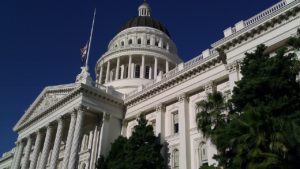
As we discussed last week, Congress is bitterly divided on almost everything. Prison and sentencing reform is a rare exception with broad support from both parties. That is why so much is riding on the FIRST STEP Act as it sits in the Senate, waiting for a vote.
The House bill had strong support from both parties
In May 2018, the House passed its version of the FIRST STEP Act 360-59 (roll call). The "yes" votes included 134 Democrats.
The bill drew support from a wide range of people and groups that you do not normally see on the same side. It was backed by the progressive American Civil Liberties Union and the conservative FreedomWorks, as well as more traditionally conservative groups like the Fraternal Order of Police and the Koch brothers.
White House adviser and presidential son-in-law Jared Kushner, whose father had served significant time in federal prison for financial-related and other crimes, worked hard to get the bill through Congress.
Support in the Senate, too
Now the question is whether the Senate can pass a version of the bill before the new Congress begins in January 2019. The Senate version adds sentencing reforms to the House bill. Senators Chuck Grassley, a Republican, and Dick Durbin, a Democrat, both on the Judiciary Committee, strongly back it.
All eyes are on McConnell. Only he can bring the bill to the Senate floor, and he has not done so yet. According to anonymous sources cited in news reports, he told the White House in a private meeting that there likely was not enough time to vote on it before the end of the year.
The pressure is building
McConnell's comments only made lawmakers in both parties push harder to change his mind, and the pressure on him has become intense. Here are a few public statements aimed at the Majority Leader.
Last week, President Trump enthusiastically endorsed the bill. He said it "will make our communities safer and give former inmates a second chance at life after they have served their time," and that he would be "waiting with [his] pen" to sign it. On Friday, November 23, he said on Twitter that McConnell and Senate Minority Leader Chuck Schumer "have a real chance to do something so badly needed in our country," and that the bill "would be a major victory." The President clearly supports passage.
House Speaker Paul Ryan has said the House would pass the compromise once the Senate does. Senate Judiciary Chairman Chuck Grassley urged fellow Republicans that "NOW is time" to pass criminal justice reform, calling it "a golden opportunity" to pass a historic bill with support from both parties.
McConnell, however, stays noncommittal at best. He said "the support for, and length of time needed to move the new bill, is not knowable at this moment."
This may be the only chance
It is unclear why McConnell seems so set on keeping this major reform bill off the Senate floor. Most lawmakers and commentators see this as possibly the bill's one and only chance. A new Democratic majority takes over the House in January 2019. Many expect newer members will not accept the bill's moderate approach, so a deal may get harder.
With support from both parties and the White House, the bill is close to becoming law. Only Mitch McConnell stands in the way. Will he hold firm in the face of such intense political pressure? We can only wait and see.
To learn more about the First Step Act, read our First Step Act FAQs.
Facing a federal sentence? Book a consultation to talk it through with Brandon Sample.