

Note
The Supreme Court's October 2017 Term: Criminal Cases to Watch
The October 2017 term produced major criminal rulings, including Dimaya on vague laws, Carpenter on cell phone records, and Class on appeals after a guilty plea.
Written by Brandon Sample · Updated · Filed under Appeals
Update (October 2026): The term is long over. Some key results:
- Sessions v. Dimaya: the residual clause of 18 U.S.C. § 16(b) is unconstitutionally vague. (opinion)
- Carpenter v. United States: getting a person's historical cell-site location records is a Fourth Amendment search. (opinion)
- Class v. United States: a guilty plea, by itself, does not bar a challenge to the constitutionality of the statute of conviction on direct appeal. (opinion)
- McCoy v. Louisiana: a defendant can insist that his lawyer not admit guilt. (opinion)
- Rosales-Mireles v. United States: a plain guidelines miscalculation that affects substantial rights ordinarily calls for vacating the sentence. (opinion)
- Byrd v. United States: a driver not listed on a rental agreement can still have a reasonable expectation of privacy in the car. (opinion)
- Collins v. Virginia: the automobile exception does not allow police to enter a home's curtilage without a warrant to search a vehicle. (opinion)
- Marinello v. United States: a tax obstruction conviction under § 7212(a) requires a pending or reasonably foreseeable tax proceeding. (opinion)
The post below was written before the term began.
The U.S. Supreme Court begins its October 2017 term tomorrow, and the docket is full of criminal cases that could affect people's convictions and sentences. First up is Sessions v. Dimaya, which is being reargued Monday.
Dimaya asks whether 18 U.S.C. § 16(b) is unconstitutionally vague, meaning too unclear to give people fair warning. A win for the challenger could open the door for many people to challenge their convictions and sentences. The Court, with eight Justices, could not resolve the case last term (the original post described it as tied 4-4) and ordered it reargued. See "Dimaya, Of Dimaya ... Where Art Thou?" Justice Gorsuch, who joined the Court after the first argument, is expected to cast the deciding vote. How he will vote is anyone's guess; the original author planned to attend the argument and share his thoughts afterward.
The Court has also agreed to hear several other important criminal cases this term. They are listed below with argument dates where scheduled. If no date is listed, argument had not yet been scheduled.
Criminal Cases on the October 2017 Docket
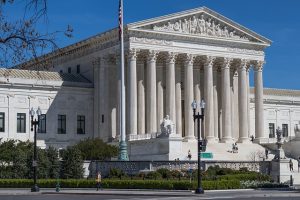
October 2017 Term - Criminal Cases
Sessions v. Dimaya, No. 15-1498 [Arg: 10.02.2017]
Issue(s): Whether 18 U.S.C. 16(b), as incorporated into the Immigration and Nationality Act's provisions governing an alien's removal from the United States, is unconstitutionally vague.
Jennings v. Rodriguez, No. 15-1204 [Arg: 10.03.2017]
Issue(s): (1) Whether aliens seeking admission to the United States who are subject to mandatory detention under 8 U.S.C. § 1225(b) must be afforded bond hearings, with the possibility of release into the United States, if detention lasts six months; (2) whether criminal or terrorist aliens who are subject to mandatory detention under Section 1226(c) must be afforded bond hearings, with the possibility of release, if detention lasts six months; and (3) whether, in bond hearings for aliens detained for six months under Sections 1225(b), 1226(c), or 1226(a), the alien is entitled to release unless the government demonstrates by clear and convincing evidence that the alien is a flight risk or a danger to the community, whether the length of the alien’s detention must be weighed in favor of release, and whether new bond hearings must be afforded automatically every six months.
District of Columbia v. Wesby, No. 15-1485 [Arg: 10.04.2017]
Issue(s): (1) Whether police officers who found late-night partiers inside a vacant home belonging to someone else had probable cause to arrest the partiers for trespassing under the Fourth Amendment, and in particular whether, when the owner of a vacant home informs police that he has not authorized entry, an officer assessing probable cause to arrest those inside for trespassing may discredit the suspects' questionable claims of an innocent mental state; and (2) whether, even if there was no probable cause to arrest the apparent trespassers, the officers were entitled to qualified immunity because the law was not clearly established in this regard.
Class v. U.S., No. 16-424 [Arg: 10.04.2017]
Issue(s): Whether a guilty plea inherently waives a defendant's right to challenge the constitutionality of his statute of conviction.
Hamer v. Neighborhood Housing Services of Chicago, No. 16-658 [Arg: 10.10.2017]
Issue(s): Whether Federal Rule of Appellate Procedure 4(a)(5)(C) can deprive a court of appeals of jurisdiction over an appeal that is statutorily timely, as the U.S. Courts of Appeals for the 2nd, 4th, 7th and 10th Circuits have concluded, or whether Federal Rule of Appellate Procedure 4(a)(5)(C) is instead a nonjurisdictional claim-processing rule because it is not derived from a statute, as the U.S. Courts of Appeals for the 9th and District of Columbia Circuits have concluded, and therefore subject to equitable considerations such as forfeiture, waiver and the unique-circumstances doctrine.
Ayestas v. Davis, No. 16-6795 [Arg: 10.30.2017]
Issue(s): Whether the U.S. Court of Appeals for the 5th Circuit erred in holding that 18 U.S.C. § 3599(f) withholds “reasonably necessary” resources to investigate and develop an ineffective-assistance-of-counsel claim that state habeas counsel forfeited, where the claimant's existing evidence does not meet the ultimate burden of proof at the time the Section 3599(f) motion is made.
Carpenter v. U.S., No. 16-402
Issue(s): Whether the warrantless seizure and search of historical cellphone records revealing the location and movements of a cellphone user over the course of 127 days is permitted by the Fourth Amendment.
Collins v. Virginia, No. 16-1027
Issue(s): Whether the Fourth Amendment's automobile exception permits a police officer, uninvited and without a warrant, to enter private property, approach a house and search a vehicle parked a few feet from the house.
Murphy v. Smith, No. 16-1067
Issue(s): Whether the parenthetical phrase “not to exceed 25 percent,” as used in 42 U.S.C. § 1997e(d)(2), means any amount up to 25 percent (as four circuits hold), or whether it means exactly 25 percent (as the U.S. Court of Appeals for the 7th Circuit holds).
Marinello v. U.S., No. 16-1144
Issue(s): Whether a conviction under 26 U.S.C. 7212(a) for corruptly endeavoring to obstruct or impede the due administration of the tax laws requires proof that the defendant acted with knowledge of a pending Internal Revenue Service action.
Byrd v. U.S., No. 16-1371
Issue(s): Whether a driver has a reasonable expectation of privacy in a rental car when he has the renter's permission to drive the car but is not listed as an authorized driver on the rental agreement.
City of Hays, Kansas v. Vogt, No. 16-1495
Issue(s): Whether the Fifth Amendment is violated when statements are used at a probable cause hearing but not at a criminal trial.
McCoy v. Louisiana, No. 16-8255
Issue(s): Whether it is unconstitutional for defense counsel to concede an accused's guilt over the accused's express objection.
Rosales-Mireles v. U.S., No. 16-9493
Issue(s): Whether, in order to meet the standard for plain error review set forth by the Supreme Court in United States v. Olano that "[t]he Court of Appeals should correct a plain forfeited error affecting substantial rights if the error ‘seriously affect[s] the fairness, integrity, or public reputation of judicial proceedings,’” it is necessary, as the U.S. Court of Appeals for the 5th Circuit required, that the error be one that “would shock the conscience of the common man, serve as a powerful indictment against our system of justice, or seriously call into question the competence or integrity of the district judge.”
More Information
For more on the October 2017 term, visit the Supreme Court's website.
Facing a federal sentence? Book a consultation to talk it through with Brandon Sample.